

In the field of industrial automation, servo cables have become an important link connecting servo motors and servo drives due to their good performance and wide application. It not only carries the important task of transmitting servo signals and power, but also ensures the efficient and stable operation of the servo system through its unique structure and characteristics.
Servo cable is a type of cable specially designed for servo systems, with a delicate structure and good performance. It usually consists of multi-core cables, encoder cables, and power cables, each of which plays an indispensable role. Multi core cables are responsible for transmitting control signals and feedback signals, encoder cables are used for transmitting position feedback signals, and power lines are responsible for providing stable power to servo motors.
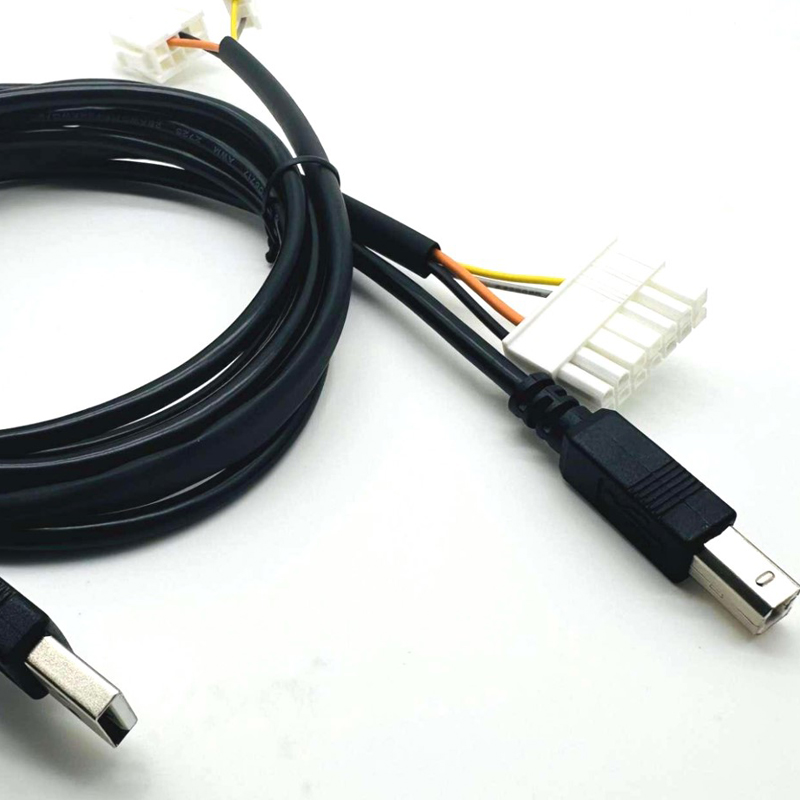
The manufacturing process of servo cables is very precise, focusing on every detail. The cable core is made of high-quality conductive materials to ensure the quality and efficiency of signal transmission. The insulation layer is made of high voltage and high temperature resistant materials, which can resist various adverse environmental damage to the cable. The shielding layer can effectively shield external electromagnetic interference and ensure stable signal transmission. Moreover, the sheath layer is made of wear-resistant, bending resistant, and oil resistant materials, which can protect the cable from external mechanical damage and chemical corrosion.
The performance characteristics of servo cables are very prominent. It has high flexibility and can adapt to various complex motion trajectories and installation environments. At the same time, it also has excellent wear resistance and bending resistance, and can maintain stable performance even under frequent bending and friction. In addition, servo cables also have excellent anti-interference ability, which can effectively resist the impact of external electromagnetic interference on signal transmission.
In the field of industrial automation, servo cables are widely used. Whether it's machine tools, robots, or production lines, they all rely on the support of servo cables. It connects servo motors and servo drives to achieve precise position control, speed control, and force control, providing powerful power for industrial automation. However, the selection and use of servo cables also require attention to some issues. Firstly, it is necessary to select the appropriate cable model and specification based on the specific servo motor and driver to ensure the performance and stability of the cable. Secondly, during installation and use, it is important to avoid excessive stretching, bending, and compression of the cable to prevent damage. In addition, it is necessary to regularly inspect and maintain the cables to ensure they are in good working condition.
In summary, servo cables, as an important component of industrial automation, provide strong guarantees for the stable operation of servo systems with their unique structure and performance characteristics. With the continuous development of industrial automation, the application of servo cables will also become more and more widespread, and their role in the field of industrial automation will become increasingly important.